Most warehouses in Dubai do not struggle with cooling. They struggle with trapped heat. Hot air builds up under the roof. Temperature rises faster than the system can handle. Air conditioning keeps running, but the heat never really leaves.
This is where many facilities start looking at green roof ventilators in Dubai as a practical solution. But not every setup works the same way.
This blog breaks down how wind driven systems actually remove heat, where they perform best, and what most facilities get wrong during installation.
If your cooling costs keep rising and indoor conditions stay uneven, understanding how heat escapes your space becomes more important than how you cool it.
Most Warehouses Do Not Have a Cooling Problem. They Have a Heat Escape Problem
Cooling systems are doing their job. The heat just stays trapped.
In large facilities, hot air rises and collects under the roof. Over time, this creates a thick layer of heat that keeps building throughout the day.
- Roof temperatures increase rapidly under direct sun
- Hot air stays concentrated at the top with no exit path
- Lower working areas receive limited airflow
- Cooling systems keep cycling without reducing heat load
This is where roof ventilators in Dubai start making a real difference.
They do not cool the space directly. They remove the heat that is causing the problem in the first place.
Once that trapped layer is released, the entire airflow inside the facility begins to stabilise. That is when cooling systems finally start working the way they should.
What Wind Driven Roof Ventilators Actually Do?
These systems do one job. They pull heat out from where it builds up the most.
In Dubai warehouses, the roof zone gets the highest heat load. Metal sheets absorb solar radiation all day. The air just below that layer gets hotter than the rest of the space.
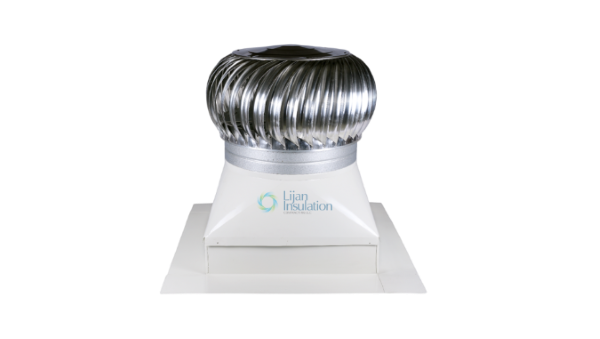
A wind driven roof ventilator in UAE uses that condition to its advantage.
- Wind rotates the turbine and creates suction
- Hot air gets pulled out through the roof opening
- Cooler air enters from lower openings or gaps
- Air starts moving in a continuous upward cycle
There is no motor. No wiring. No energy input. The system runs as long as there is temperature difference or airflow.
|
A Real Dubai Warehouse Scenario:
A logistics warehouse in Jebel Ali starts facing the same issue every summer.
By midday, the upper zone becomes extremely hot. Workers on the floor feel the heat drop down slowly. The AC runs longer, but the space still feels uneven.
Temperature readings show a clear pattern.
- Air near the roof is significantly hotter
- Heat stays trapped with no exit path
- Cooling systems struggle to keep up
The facility installs wind driven green roof ventilators across the roofline.
Within weeks, the change becomes noticeable.
- Hot air no longer builds up under the roof
- Indoor temperature becomes more balanced
- AC runtime reduces during peak hours
Nothing else changes.
|
Why Dubai Warehouses Heat Up Faster Than Expected
The issue is not just outside temperature. It is how the structure handles heat.
Most industrial buildings in Dubai are not designed to release heat efficiently. They hold it.
1. Roofs Act Like Heat Collectors
Metal roofing absorbs solar radiation all day.
- Surface temperatures rise quickly
- Heat transfers directly into the internal air layer
- The upper zone becomes significantly hotter than the rest
This creates a constant heat source above your workspace.
2. Air Stratification Traps Heat at the Top
Hot air rises and stays there.
- No natural exit path for accumulated heat
- Temperature difference builds between roof and floor levels
- Lower areas never fully stabilise
This is why workers feel heat even when cooling is active.
3. Limited Air Movement at Working Level
Large open spaces reduce airflow control.
- Air circulation stays weak near the floor
- Heat gradually drops down instead of being removed
- Cooling systems fight against rising heat layers
Without proper extraction, air keeps recycling the same heat.
4. Continuous Heat Gain from Operations
Warehouses do not operate in isolation.
- Loading bays bring in external heat
- Equipment and lighting add internal heat load
- Doors opening frequently disrupt airflow balance
All of this adds to the trapped heat problem.
How Wind Driven Ventilators Reduce Heat Load Inside the Facility?
Once heat builds up under the roof, it starts affecting everything below.
Removing that layer changes how the entire space behaves.
1. They Break the Heat Layer at the Top
The hottest air sits just below the roof.
Ventilators create a constant upward pull.
- Hot air gets extracted instead of accumulating
- Temperature at the top stops rising continuously
- Downward heat transfer reduces
This prevents the slow spread of heat across the space.
2. They Restore Air Movement Across the Volume
Stagnant air is a major issue in large facilities.
When hot air exits, fresh air has to enter.
- Air starts moving from lower openings
- Circulation improves across the floor level
- Dead zones begin to reduce
This improves how the space feels during operation.
3. They Reduce Load on Mechanical Cooling Systems
Cooling systems struggle when heat keeps building.
By removing that heat source:
- AC cycles become shorter
- Cooling becomes more effective
- Energy usage starts dropping over time
The system stops working against trapped heat.
4. They Stabilise Temperature Variation Across the Space
Uneven temperatures create operational discomfort.
With continuous heat removal:
- Roof-level heat stays controlled
- Floor-level temperatures become more consistent
- Overall indoor conditions improve
This makes a noticeable difference in daily operations.
Wind Driven Vs Electric Ventilation Systems: What Actually Works in Dubai
Both systems move air. They do it very differently. The difference shows up in how they handle heat, cost, and daily operation inside large facilities.
| Factor |
Wind Driven Roof Ventilators |
Electric Ventilation Systems |
| Energy use |
No power required |
Continuous electricity consumption |
| Operation |
Runs whenever heat or airflow exists |
Runs only when switched on |
| Heat extraction |
Continuous removal from roof level |
Depends on fan placement and capacity |
| Coverage |
Works across large roof areas |
Limited to installed zones |
| Maintenance |
Minimal moving parts |
Regular servicing and breakdown risk |
| Operating cost |
Near zero after installation |
Ongoing energy and maintenance cost |

But they also add cost, require maintenance, and depend on correct sizing and operation.
Wind driven systems work differently.
They run continuously without intervention. They remove heat as it builds, not after it becomes a problem.
Where Each One Fits
- Wind driven ventilator systems handle background heat removal
- Electric ventilator systems handle targeted extraction where required
The mistake is expecting one system to do both jobs.
Common Mistakes in Installing Industrial Roof Ventilation Systems
Most ventilation issues are not mechanical. They come from poor planning.
1. Installing Ventilators Without an Airflow Plan
Ventilators need air to replace what they remove.
- No intake openings mean weak airflow
- Hot air stays trapped despite installation
- System underperforms from day one
Extraction without intake does not work.
2. Treating Ventilators as a Standalone Solution
Many facilities expect one system to fix everything.
- No coordination with existing ventilation
- No integration with building layout
- No consideration of internal heat sources
This leads to partial improvement, not real results.
3. Poor Placement Across the Roof
Positioning matters more than quantity.
- Uneven distribution creates hot zones
- Key heat pockets remain untouched
- Airflow becomes inconsistent across the space
Placement should follow heat patterns, not convenience.
4. Underestimating Required Capacity
Installing fewer units to save cost creates long term issues.
- Heat removal remains incomplete
- Temperature imbalance continues
- System never reaches expected performance
Sizing needs to match volume and heat load.
5. Ignoring Maintenance Access and Safety
Even simple systems need access.
- Difficult inspection points
- Unsafe roof access conditions
- Neglected maintenance over time
This reduces system effectiveness gradually.
|
Simple Reality Check: Ventilation does not fail because of the product. It fails because the system was not designed as a system.
|
Conclusion
Ventilation is not about adding equipment. It is about fixing how air moves through your space. In Dubai, that means dealing with constant heat, high roof temperatures, and large open volumes that trap air where it should not stay.
This is where experience on local projects makes the difference.
Lijan Group approaches ventilation with Dubai-specific plans built around real site conditions. Not generic layouts, but systems designed for how heat builds, moves, and exits in this climate.
That is what turns ventilation into performance, not just installation.
Still cooling the space without fixing the heat? Talk to Lijan Group and get airflow that actually works.
FAQs
1. What is a wind driven roof ventilator and how does it work?
It uses wind and heat difference to extract hot air from the roof without electricity.
2. Do roof ventilators work effectively in Dubai’s hot climate?
Yes, they perform well due to high temperatures and consistent airflow conditions.
3. Can roof ventilators reduce AC usage in warehouses?
They help reduce heat buildup, which lowers the load on cooling systems.
4. How many roof ventilators are needed for a warehouse?
It depends on roof size, heat load, and airflow design, not just area.
5. Are wind driven ventilators enough for complete ventilation?
They handle heat removal well but may need support systems for specific airflow needs.