Rockwool vs Ceramic Fiber Insulation: Which Is Better for Industrial Use in the UAE?
Introduction
Selecting the right insulation material is one of the most consequential decisions in any industrial project. The wrong choice leads to underperformance, premature degradation, and costs that compound over the life of the asset. Two of the most widely used materials in UAE industrial insulation projects are Rockwool and ceramic fiber, and while both are effective in the right applications, they are not interchangeable. At Lijan Group, the trusted Rockwool insulation material suppliers in Dubai since 2004, we help facilities across petrochemical, power, marine, and industrial sectors specify the right material for their exact operating conditions. This guide breaks down the comparison clearly.
What Is Rockwool Insulation?
Rockwool, also known as mineral wool or stone wool, is produced by melting volcanic rock and spinning it into a fibrous mat. The result is a dense, resilient insulation material with excellent thermal performance, strong fire resistance, and good acoustic dampening properties. It is available in blanket, slab, pipe section, and loose fill formats to suit a wide range of industrial applications.
Rockwool performs effectively across a temperature range typically up to around 750 degrees Celsius depending on the specific product grade. It is resistant to moisture, dimensionally stable under load, and does not support combustion. These properties make it a versatile and reliable choice for pipe insulation, equipment insulation, and building envelope applications across UAE industrial facilities. Lijan Group stocks Marine Rockwool as dedicated Rockwool insulation material suppliers in Dubai, providing certified product for both onshore and offshore marine applications where performance standards are rigorous.
What Is Ceramic Fiber Insulation?
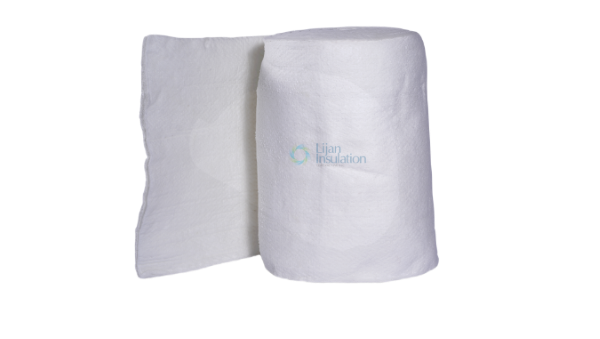
Ceramic fiber insulation is manufactured from alumina and silica fibres and is engineered specifically for high-temperature applications. Its defining advantage is its ability to perform at temperatures that exceed the range of most conventional insulation materials, from approximately 1,000 degrees Celsius up to 1,600 degrees Celsius for specialist grades.
Ceramic fiber is extremely lightweight, has very low thermal mass, and responds rapidly to temperature changes, making it highly effective in applications involving thermal cycling. It is available in blanket, module, board, and loose fill formats. Lijan Group stocks Luyang and Unifrax ceramic fiber blankets and accessories, two of the most respected brands in high-temperature insulation globally.
Key Differences for Industrial Applications
Temperature Range
This is the primary deciding factor. For applications operating below 750 degrees Celsius, Rockwool is the practical, cost-effective choice. For furnaces, kilns, fired heaters, and any equipment operating above 750 degrees Celsius, ceramic fiber is the correct specification. Using Rockwool beyond its rated temperature leads to rapid material breakdown and loss of insulation performance.
Weight and Thermal Mass
Ceramic fiber is significantly lighter than Rockwool and has very low thermal mass, which means it heats up and cools down quickly. This makes it ideal for applications involving frequent temperature cycling where energy efficiency during startup and shutdown matters. Rockwool's higher density and thermal mass suit steady-state operating conditions better.
Cost
Rockwool is less expensive per square metre than ceramic fiber. For large-scale insulation projects operating within Rockwool's temperature range, the cost advantage is meaningful. Ceramic fiber commands a higher material cost that is justified by its performance in extreme temperature environments where no alternative material is appropriate.
Handling and Installation
Both materials require appropriate personal protective equipment during installation. Ceramic fiber requires careful handling to minimise fibre release. Rockwool is more robust during installation and easier to work with for large surface area applications. As experienced Rockwool insulation material suppliers in Dubai, Lijan Group provides installation guidance and accessories for both materials to ensure correct specification and safe application.
Which Should You Specify?
For pipe insulation, equipment insulation, and building applications in standard to moderate temperature industrial environments, Rockwool is the recommended choice for its combination of performance, durability, and cost-effectiveness. For high-temperature equipment such as furnaces, reformers, incinerators, and fired heaters, ceramic fiber is the only appropriate material. Many industrial facilities use both, with Rockwool covering the majority of the insulation scope and ceramic fiber applied to the highest-temperature zones.
Conclusion
Rockwool and ceramic fiber each serve a defined and important role in UAE industrial insulation. Rockwool delivers reliable, cost-effective thermal performance across the vast majority of industrial applications. Ceramic fiber takes over where temperatures exceed Rockwool's capability, providing performance that no other material can match in extreme heat environments. At Lijan Group, our position as specialist Rockwool insulation material suppliers in Dubai, combined with our ceramic fiber product range and decades of installation experience, means we can guide your facility to the right material for every part of your insulation scope.
Contact Lijan Group today. Visit our contact page, call +971 4 267 4966, or WhatsApp +971 55 123 5925 to discuss your insulation material requirements.
Frequently Asked Questions
What temperature can Marine Rockwool handle in UAE industrial applications?
Marine Rockwool is rated for continuous service temperatures typically up to around 750 degrees Celsius depending on the specific product grade. Always confirm the operating temperature with your supplier before specifying.
Does Lijan Group supply ceramic fiber in blanket and module formats?
Yes. We stock Luyang and Unifrax ceramic fiber in blanket format along with associated accessories for high-temperature insulation installations.
Can Rockwool be used in offshore marine environments?
Yes. Marine-grade Rockwool is specifically certified for offshore and marine applications and is part of the Lijan Group product range.
Does Lijan Group offer installation services as well as material supply?
Yes. Lijan Group provides both supply and full installation services for industrial insulation systems across the UAE, including thermal insulation, jacketing, and cladding works.
