How to Tell If Your Industrial Insulation in Dubai Needs Replacing
Introduction
Industrial insulation does not fail all at once. It deteriorates gradually, and in many cases the signs are visible long before the system reaches the point of complete failure. The problem is that most facilities only act when energy costs spike or a major process disruption forces the issue. At Lijan Group, one of the leading insulation and cladding companies in Dubai since 2004, we help petrochemical, power, desalination, and manufacturing facilities across the UAE identify insulation problems before they become expensive emergencies. Here is exactly what to look for.
1. Visible Physical Damage to Cladding and Jacketing
The outer cladding or jacketing on industrial pipe and equipment insulation serves as the first line of defence against mechanical damage, moisture ingress, and UV degradation. If you can see dents, corrosion, missing sections, open seams, or areas where the cladding has pulled away from the underlying insulation, the system is compromised. In Dubai's climate, damaged cladding allows moisture to penetrate the insulation material beneath, leading to accelerated deterioration and corrosion under insulation, commonly known as CUI.
Lijan Group provides comprehensive repair and maintenance services for insulation cladding systems across power and desalination plants, refineries, petrochemical facilities, and offshore and onshore oil rigs. Our team inspects and restores jacketing to prevent the far costlier consequences of untreated moisture ingress.
2. Rising Energy Consumption Without a Process Change
One of the clearest indicators that industrial insulation is underperforming is an unexplained increase in energy consumption. When insulation loses its thermal resistance due to compression, moisture saturation, or material breakdown, your facility uses more energy to maintain the same process temperatures. If your energy bills are climbing but your operations have not changed, a systematic insulation inspection is warranted.
As one of the most experienced insulation and cladding companies in Dubai, Lijan Group conducts thermal assessments that identify heat loss points and help facilities calculate the true cost of degraded insulation versus the cost of replacement.
3. Surface Temperature Anomalies on Pipes and Equipment
Pipes and equipment that are correctly insulated should not have hot spots detectable by hand or by infrared scanning. If certain sections of pipework feel warm to the touch or thermographic surveys reveal inconsistent surface temperatures along an insulated run, this indicates localised insulation failure. In high-temperature industrial environments, these hot spots also represent a personal protection hazard for site personnel, which carries direct safety and compliance implications.
4. Moisture, Rust Stains, or Wet Insulation
Water is the primary enemy of industrial insulation systems. If you notice rust staining on cladding surfaces, water dripping from insulated pipe sections, or areas where the insulation material feels soft or wet when pressed, moisture has already penetrated the system. Wet insulation loses its thermal performance almost entirely and accelerates corrosion on the pipe or equipment surface beneath. In many cases, the insulation material must be removed, the surface treated for corrosion, and a complete replacement installed.
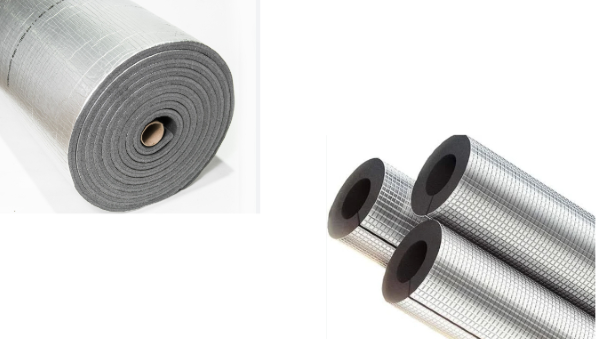
5. Age of the Insulation System
Even without visible damage, industrial insulation has a finite service life that depends on the material type, operating temperatures, and environmental exposure. Systems that have been in service for fifteen years or more in UAE conditions, with the combination of extreme heat, humidity cycles, and process temperature fluctuations, should be scheduled for a thorough condition assessment. Proactive replacement of aging insulation avoids unplanned shutdowns and protects critical equipment from corrosion damage that accumulates silently beneath a degrading system.
What Lijan Group Offers
Lijan Group supplies and installs Marine Rockwool, Ceramic Fiber, Calcium Silicate, and removable insulation jacket systems across the full range of industrial sectors in the UAE. Our ISO 9001:2015 certified team is available around the clock for inspections, emergency repairs, and full system replacements. We are headquartered in Dubai with branches in Fujairah and Sharjah, giving us coverage across the region.
Conclusion
Degraded insulation rarely announces itself dramatically. It shows up in energy bills, surface temperatures, rust stains, and slowly worsening process efficiency. Identifying these signs early and acting on them is what separates well-maintained facilities from those facing expensive unplanned interventions. As one of the most trusted insulation and cladding companies in Dubai, Lijan Group has the expertise, products, and technical teams to assess, repair, and replace industrial insulation systems across the UAE.
Contact Lijan Group today. Visit our contact page, call +971 4 267 4966, or WhatsApp +971 55 123 5925 to request an inspection or quote.

Frequently Asked Questions
How often should industrial insulation systems be inspected in the UAE?
Annual inspections are the minimum recommended frequency for most industrial systems. Facilities in high-humidity or coastal environments, or those running at elevated temperatures, benefit from more frequent assessments.
Can damaged sections be repaired without replacing the entire system?
Yes, in many cases. Lijan Group's repair and maintenance team can replace localised damaged sections, restore cladding integrity, and extend system life without full replacement where the underlying insulation material remains sound.
What is corrosion under insulation and why is it a concern?
CUI is corrosion that develops on pipe or equipment surfaces beneath insulation, typically caused by moisture ingress. It is difficult to detect without removing cladding and is one of the leading causes of unplanned asset failures in industrial facilities.
Does Lijan Group work on offshore facilities?
Yes. Lijan Group serves both onshore and offshore oil rigs and marine facilities as part of our broader industrial insulation service scope.