There is a growing conversation happening in Dubai's building and facilities management community about the true cost of artificial lighting in commercial and industrial spaces. For buildings that operate across long daily hours, the electricity consumed by lighting alone is substantial. Add to that the heat generated by artificial lighting fixtures, which then adds to the cooling load on air conditioning systems, and the compounding cost of conventional lighting in the UAE climate becomes a meaningful operational issue.
Tubular skylights offer a direct solution to this problem. They are not a new technology, but their relevance to the UAE's built environment is increasingly well understood, and the quality of the solutions available in the region has advanced considerably. For building owners, facility managers, and project engineers thinking about energy efficiency, occupant comfort, and long-term running costs, a tubular skylight in Dubai is worth understanding in detail.
What Is a Tubular Skylight?
A tubular skylight is a daylight delivery system that captures natural sunlight at roof level and channels it into interior spaces through a highly reflective tube, delivering it as diffused natural light through a ceiling-mounted diffuser. Unlike a conventional flat skylight or glazed roof opening, a tubular skylight captures light through a small rooftop dome and transfers it efficiently through a tube that can run through ceiling voids, roof spaces, or between floors, making it applicable to spaces that would not otherwise have direct roof access to natural light.
The result is a consistent spread of natural daylight in areas that typically rely entirely on artificial lighting, without the heat gain, UV transmission, or structural complexity of a conventional skylight opening.
The Energy Case for Natural Daylighting in the UAE
The UAE has some of the highest solar irradiance levels in the world. The same sun that drives air conditioning loads is also an abundant and entirely free source of visible light. A tubular skylight in Dubai converts that resource into usable interior illumination, reducing or eliminating the need for artificial lighting during daylight hours in the spaces it serves.
Lijan Group's natural tubular skylights are designed to enhance the working environment with natural daylight solutions for optimal comfort and productivity. The practical energy saving from replacing artificial lighting with natural daylighting is significant, particularly in industrial facilities, warehouses, and commercial buildings that operate during the day. Lighting circuits that run for ten or more hours daily across large floor areas represent a substantial portion of a building's electricity consumption, and a well-designed tubular skylight system can reduce or eliminate that load across the zones it serves.
The secondary benefit is equally important in Dubai's climate. Artificial lighting generates heat. In a space where air conditioning is already working hard against the ambient temperature, reducing the heat output of lighting fixtures reduces the cooling load and further compounds the energy saving. A tubular skylight delivers light without the associated heat gain of electrical fixtures, and with considerably less solar heat gain than a conventional glazed skylight.
How a Tubular Skylight Works in Practice
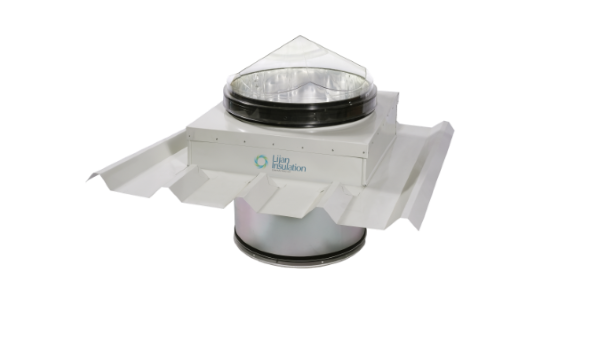
The system consists of three main components: a rooftop dome that captures sunlight and is designed to resist UV degradation, heat, and weather; a highly reflective tube that transfers the captured light downward through the building structure; and a ceiling diffuser that spreads the light evenly into the occupied space below.
The rooftop dome is typically small in diameter, which minimises the roof penetration required and reduces both structural impact and the risk of water ingress compared to a conventional skylight opening. The tube itself uses a highly reflective interior lining to transmit light efficiently over the distance between roof and ceiling, maintaining light levels even when the tube runs at angles or through multiple layers of building structure.
The diffuser at the ceiling level distributes the incoming daylight as a soft, even spread of natural light, avoiding the glare or harsh hotspot that an unfiltered opening would create. The quality of light produced is genuinely natural, which has documented benefits for occupant wellbeing, alertness, and comfort compared to artificial lighting, even high-quality artificial sources.
Some tubular skylight systems also incorporate optional artificial lighting integration, allowing the same ceiling diffuser to function as a conventional light fitting when natural light levels are insufficient, such as during night shifts or on overcast days. This gives the building a seamless single-point lighting solution that transitions between natural and artificial sources without visible interruption.
Where Tubular Skylights Are Most Effective
Lijan Group's natural tubular skylights are suited to a wide range of building types across Dubai and the UAE, and the applications where the benefit is most significant share a common characteristic: they are spaces that need sustained, reliable daytime lighting but cannot cost-effectively maintain conventional electrical lighting across their full operating hours.
Large warehouses and logistics facilities are among the most compelling use cases. These buildings typically have enormous floor areas, high ceilings, and operate throughout the day with staff working across the entire space. The lighting load in a large warehouse is substantial, and the ability to replace a significant proportion of that load with natural daylighting through a well-designed tubular skylight in Dubai installation generates meaningful, ongoing savings.
Manufacturing and industrial facilities benefit similarly, with the additional advantage that natural light improves the accuracy of visual inspection tasks and reduces eye strain for workers performing detailed work over extended periods.
Commercial buildings, offices, retail spaces, and institutional facilities including schools, hospitals, and community centres all benefit from the quality of natural light that tubular skylights deliver. Natural daylighting in workspace environments is associated with improved mood, reduced fatigue, and better overall occupant wellbeing, which has implications for productivity and for the experience of anyone spending time in the space.
Applications for green roof ventilators and natural lighting solutions from Lijan Group include airports, transportation centres, hospitals, clinics, schools, colleges, indoor stadiums, sports complexes, shopping malls, museums, and exhibition halls, reflecting the breadth of building types where this technology delivers genuine value.
Tubular Skylights Compared to Conventional Skylights
The comparison between tubular and conventional skylights is worth making directly, because the two are sometimes treated as equivalent alternatives when they serve quite different purposes and have very different performance characteristics.
A conventional flat or pitched skylight creates a direct opening between the roof and the interior space. This delivers good light levels in the zone directly below the opening but also transmits solar heat, UV radiation, and glare. In Dubai's climate, the solar heat gain through a conventional unshaded skylight is considerable, and managing it requires either shading systems, high-performance glazing, or acceptance of increased cooling loads. Conventional skylights are also structurally more complex to install and represent a larger roof penetration.
A tubular skylight in Dubai delivers natural daylight with significantly lower heat gain because the dome's optical design captures visible light while reducing solar heat transmission, and the diffuser at the ceiling level further moderates the light quality. The roof penetration is small, installation is faster, and the system is far less likely to cause maintenance issues over time. The trade-off is that the light delivered is diffused and ambient rather than directional, which suits general illumination purposes very well but would not replicate the effect of a large glazed opening for architectural reasons.
For applications where the primary goal is reducing artificial lighting costs and improving ambient light quality across a large floor area, the tubular skylight is generally the more practical and cost-effective solution in the UAE context.

Installation and Customization in Dubai
Lijan Group, founded in 2004 and headquartered in Dubai with branches in Fujairah, Sharjah, and India, provides end-to-end solutions for their natural tubular skylight systems, including site assessment, sizing, supply, and installation across Dubai and the UAE. Their systems are designed to meet local building standards and are specified to the requirements of each individual project rather than supplied as off-the-shelf units without consideration of the specific building.
Proper specification matters considerably for tubular skylights. The number of units required, their diameter, placement across the floor plan, and the tube routing through the building structure all affect the quality and distribution of light delivered. A site assessment that accounts for the building's orientation, roof type, ceiling height, and intended use of each zone ensures that the installed system delivers the results expected rather than simply meeting a specification on paper.
Lijan Group's team specialises in delivering innovative and reliable solutions for industrial insulation and climatisation projects across diverse sectors, serving power and desalination plants, refineries, petrochemical facilities, and industrial operations in cement, steel, fertiliser, and chemical industries, as well as commercial and residential applications. Their expertise across both the industrial and commercial sectors means they understand the specific requirements of each building type and can design a tubular skylight installation that integrates well with the wider building systems.
A Practical Investment for the UAE's Energy Landscape
The UAE's commitment to reducing energy consumption and carbon emissions across its built environment makes natural daylighting solutions increasingly relevant for any building owner or developer thinking about long-term operational costs and sustainability credentials. A tubular skylight in Dubai is not a complex or disruptive installation, but the impact on lighting energy consumption and occupant comfort is sustained and measurable across the life of the building.
For facilities managers, project engineers, and building owners wanting to understand whether natural tubular skylights are appropriate for their specific buildings, Lijan Group provides consultation and site assessment as part of their service. To learn more or discuss your project, visit lijangroup.com or contact the team at +971-4-2674966.