Be it your home, a commercial space, a warehouse, a school, a villa, or an industrial shed, integrating natural daylight into such a property has become an operational priority rather than an architectural luxury. In a city like Dubai, where the sun is available more than anywhere else in the world, this has become a sustainable and efficient way to tackle the rising electricity tariffs and strict sustainability rules. However, the confusion lies in how to approach this with the two available options: tubular skylight or traditional skylight.
Whenever they think of integrating a skylight, most building owners hesitate, wondering whether it is necessary to cut a big hole in the roof for a traditional skylight or whether they should go with something smarter. In Dubai, natural light is cheap to get, but ironically, expensive to manage. If you cut a big hole and add too much glass, you will be paying for it in air conditioning. On the other hand, if the skylight structure is too small, you will have to rely on lights all day for no reason.
Here is where we can compare the two: a traditional skylight and a tubular skylight in Dubai. They both promise daylight but have entirely different ways to actually get you there. They come with very different price tags and different long-term results. Let us get into the structural differences, direct costs, thermal performance, and practical installation requirements of both options to figure out the system that works for your property.
Traditional skylights vs. tubular skylights: what are we comparing?
Traditional skylights are the classic skylights you commonly see in old structures and buildings in Dubai. They are the flat or dome glass panels, also known as GRP, that you have been familiar with for decades. They are basically windows installed horizontally or at an angle, letting light enter straight down into a room from above.
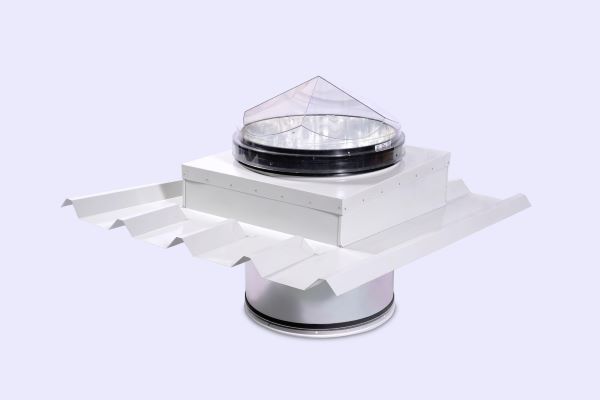
Tubular skylights, on the other hand, are structured to use a small rooftop dome to capture sunlight. The light then travels down a highly reflective tube and spreads into the room through a diffuser on the ceiling. At Lijan Group, we have a collection of tubular skylights in different diameters, including 250mm, 350mm, 530mm, and 750mm. With a tubular skylight, the roof penetration is far smaller than a conventional skylight, but with significant light output.
Cost comparison: upfront and over time
1. Upfront installation cost
Traditional skylights generally cost more than tubular skylights to install because,
- They demand larger roof openings, which require more structural work
- Labor time is longer, especially if the roof is sloped or the building is industrial
- Glass units need frames, flashing, and open reinforced supports
- In some cases, the installation process may need cranes or scaffolding for placement if the units are larger
Tubular skylights have comparatively low upfront cost because
- The roof opening is small depending on the diameter of the tube
- Typically, no major structural changes are needed
- Quicker installation with few hours spent per unit
- It allows the installation of multiple units across a large facility without any major disruption to operations
2. The real difference: running costs
Most people do not think much of the running costs when it comes to skylights, especially because they see it as a one-time investment where, unlike installations that run on electricity, nature takes care of the rest. However, they are mostly wrong, and a skylight means a long-term relationship with your energy bill.
If we take traditional skylights, especially the single-glazed or poorly insulated ones, they let a lot of heat into the room along with the light. As you can guess, Dubai’s climate translates that extra heat into increased air conditioning use. Property owners often report a significant spike in cooling costs after the installation of large glass skylights, which can exhaust any savings you made on reduced lighting.
Tubular skylights work in a more efficient way. They are designed to separate light from heat more effectively in comparison. The reflective tube transmits visible light while the sealed system and UV-resistant dome control heat transfer. As per our research, a tubular skylight in Dubai can reduce the temperature by up to 4-6 degrees Celsius in the lit space in comparison to a traditional skylight. This can add up to real electricity savings in air-conditioned buildings over a year.
3. Maintenance cost
- Traditional skylights demand regular checks on flashing to prevent leaks, along with regular resealing and occasional glass replacement
- Tubular skylights have comparatively fewer seals exposed to direct weather. Also, the dome materials are mostly designed to resist UV degradation and impact. Meaning they do not demand as much maintenance as traditional skylights do.
- Larger glass units used in traditional skylights are more vulnerable to cracking from heat stress or debris impact, and hence, there is a higher chance of increased replacement costs.
Besides these reasons, the maintenance bill for a traditional skylight setup is considered high, especially due to the higher number of seals and more surface area they feature.
Performance comparison
1. Light quality
Traditional skylights, as you have already seen, let in strong, direct light. Although this characteristic is great for large open areas, it can create harsh glare, hot spots, and uneven lighting depending on the angle at which the light comes in. Tubular skylights distribute light more evenly through the diffuser, giving a softer, more consistent glow throughout the day without the harsh contrast.
2. Heat control
Traditional skylights or standard glass skylights act like greenhouses that trap heat, especially during summer months. This is exactly where tubular skylights have a clear edge since they are designed with,
- UV-resistant coatings on the dome
- Bottom Diffuser helps to spread light uniformly avoid localised heat and light
- Sealed tube construction to prevent dust and heat infiltration
3. Durability in Dubai’s climate
Dubai’s climate, which includes intense UV exposure, dust storms, and extreme heat, is in no way gentle on building materials. Traditional glass skylights can turn yellow, crack, or weaken faster under such environmental conditions. Whereas a tubular skylight in Dubai, which is made from high-impact polycarbonate with a UV-protection coating, can last in these conditions without losing clarity or strength in the long term.
Traditional vs. tubular skylights in Dubai: Where each option makes sense – H2
Although you might think that one of these two options definitely sounds better, that is not always the case. They work differently, depending on the property and requirements
Traditional skylights are made for
- Spaces that demand a large, open view of the sky
- Areas without major heat load concerns (for eg, shaded courtyards)
- Architectural features where the skylights become a design statement
Tubular skylights are meant for
- Homes and offices where energy efficiency is the priority
- Warehouses and industrial facilities with deep floor plans
- Schools, hospitals, and retail spaces that need consistent, glare-free light
- Spaces with limited roof access or structural constraints
- Any building where reducing cooling costs is the priority
Frequently Asked Questions
1. Do skylights have any health or comfort benefits?
Letting natural light into spaces where you live is not just about saving on electricity. It also affects how people feel in a space. For instance, offices, schools, and homes that get a steady, glare-free supply of daylight tend to see benefits like reduced eye strain, better mood, and improved focus. According to our research at Lijan Group, this is the reason why schools across the UAE have been switching to tubular daylighting systems instead of relying completely on artificial lighting.
2. Is a tubular skylight as bright as a traditional skylight?
For most residential and commercial spaces, the answer is yes: tubular skylights are as bright as traditional skylights. This happens because the smaller diameter of tubular skylights is compensated for by the highly reflective tube, which carries a surprising amount of light.
3. Can we install tubular skylights in buildings that feature false ceilings?
Yes, we can. In fact, this is one of the biggest advantages of tubular skylights. The tube can travel through empty spaces and false ceilings to deliver light exactly where it is needed. This is possible even in rooms without direct roof access.
